
Why does my painting look amateur?
It’s a question many artists ask — often quietly.
Not because they haven’t tried.
But because something in the work doesn’t feel right.
You may have spent time learning techniques.
You may have completed multiple paintings.
And yet, when you look at your work, it doesn’t feel as strong, clear, or resolved as you expected.
There’s a gap.
And it’s difficult to explain.
My Perspective
I’m Gosia Margie Witko.
I help artists understand what’s happening in their painting so they can develop their work with more clarity and confidence.
My background spans over four decades across design, technology, and consulting, where I focused on building systems that bring structure to complex processes.
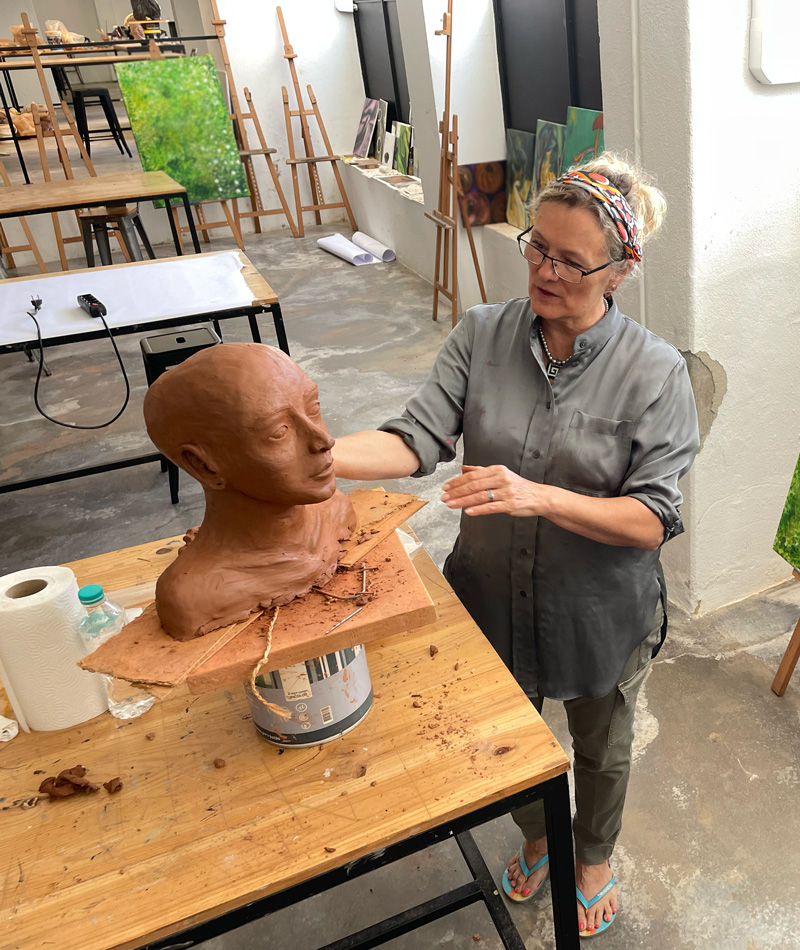
Alongside that, I’ve always maintained an art practice — often working independently, exploring materials, and learning through observation rather than formal instruction.
That combination shaped how I approach painting today.
What “Amateur” Actually Means
When artists describe their work as “amateur,” they are rarely talking about effort.
They are responding to something they can feel, but not yet explain.
Often, it shows up as:
a painting that feels unresolved
elements that don’t connect
areas that compete instead of support
a lack of cohesion across the surface
It’s not one mistake.
It’s a pattern.
The Real Issue
Most artists try to improve by:
learning more techniques
adding more detail
working longer on the painting
But these don’t always solve the problem.
Because the issue is not how much you do.
It’s how the painting is working.
Structure vs Surface
A painting can look detailed and still feel weak.
It can be technically correct and still feel off.
This happens when the underlying structure is unclear.
Structure includes:
how values are organized
how colour relationships interact
how the composition holds together
how elements support each other
Without this, the painting lacks unity.
A Common Experience
You may recognize this:
You finish a painting.
It looks “fine.”
But something doesn’t sit right.
So you adjust.
You add more detail.
You change colours.
And slowly, the painting becomes overworked — but not clearer.
This is not a lack of ability.
It’s a lack of clarity.
A More Useful Question
Instead of asking:
“Why does my painting look amateur?”
A more useful question is:
“What is not holding together in this painting?”
This changes your focus.
You move from judging the result…
to understanding the structure.
What to Look For
When a painting feels weak, observe:
Are the values clearly organized?
Do colours support or compete with each other?
Is there a clear focal area?
Do all parts of the painting contribute to the whole?
These questions reveal what’s happening beneath the surface.
My Approach
This is where my work begins.
Not with correction.
But with understanding.
I guide artists to see:
how their painting is structured
what is working
what is breaking down
This creates clarity.
And from clarity, stronger decisions follow.
The Studio Framework
My work is built around this process.
Each month begins with a question connected to a core part of painting.
You explore that question through your own work.
Not by copying steps.
But by observing and responding.
Over time, you begin to:
see patterns
understand relationships
and develop consistency
The Art Studio Residency
This approach takes place inside The Art Studio Residency.
It’s a private online studio where artists return regularly to paint, explore ideas, and develop their work over time.
There’s no fixed path.
The focus is on:
understanding your work
building clarity
and developing your painting practice in a structured way
What Changes
As you continue, something shifts.
You stop relying on guesswork.
You begin to recognize:
what strengthens a painting
what weakens it
and how to adjust with intention
Your work starts to feel more cohesive.
More resolved.
More yours.
If you’ve been asking:
“Why does my painting look amateur?”
You’re not lacking skill.
You’re encountering structure.
And once you begin to see that clearly, your work begins to change.