How do I create depth in a painting?
It’s a question that comes up early… and never really goes away.
You may have colour, form, and a clear subject.
But when you step back, the painting feels flat.
It doesn’t open up.
It doesn’t pull you in.
Everything seems to sit on the same surface.
You try adding more detail.
You adjust colours.
You rework areas.
But the sense of space still isn’t there.
My Perspective
I’m Gosia Margie Witko.
I help artists understand how their painting works so they can develop their work with more clarity and intention.
My background spans over four decades across design, technology, and consulting, where I built systems to bring structure and clarity to complex processes.
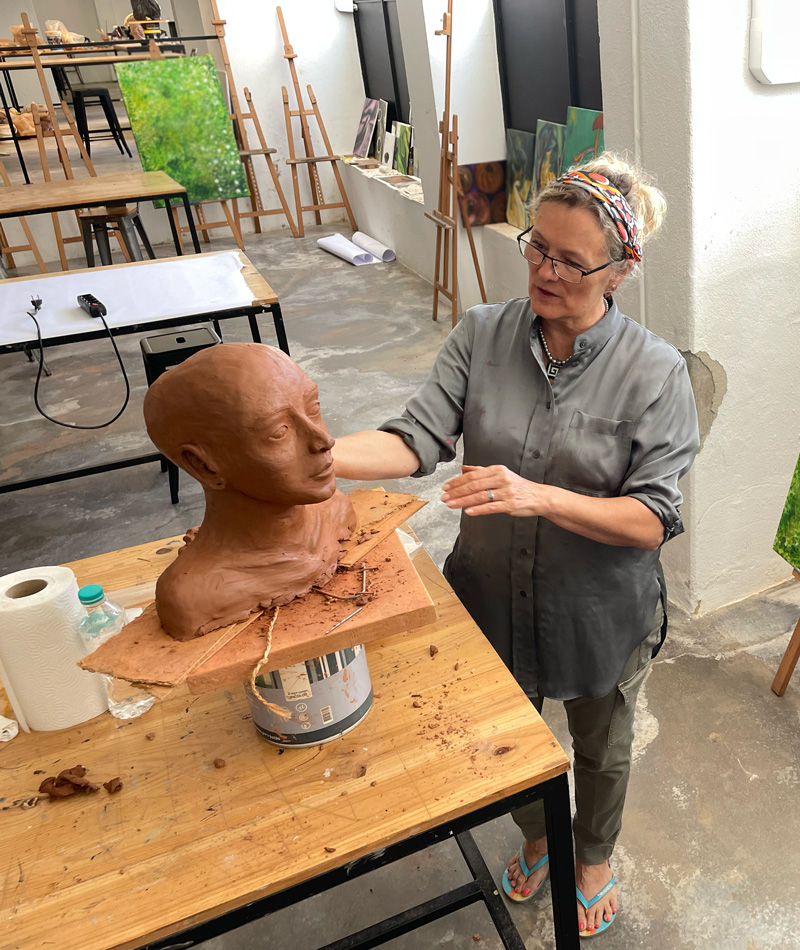
Alongside that, I’ve maintained a lifelong art practice — often exploring materials, observing relationships, and learning through the process rather than following fixed rules.
That perspective shapes how I approach depth in painting.
The Misunderstanding About Depth
Most artists are taught that depth comes from:
perspective
shading
adding more detail
These can help.
But they don’t create depth on their own.
Depth is not something you add.
It’s something that emerges from relationships.
The Nature of a Painting
A painting is flat.
Everything happens on a surface.
So depth is an illusion.
And that illusion depends on how elements interact.
If those relationships are unclear, the illusion breaks.
The Core Relationships That Create Depth
Depth comes from several key relationships working together:
1. Value (Light and Dark)
This is the foundation.
If values are too similar, everything collapses into one plane.
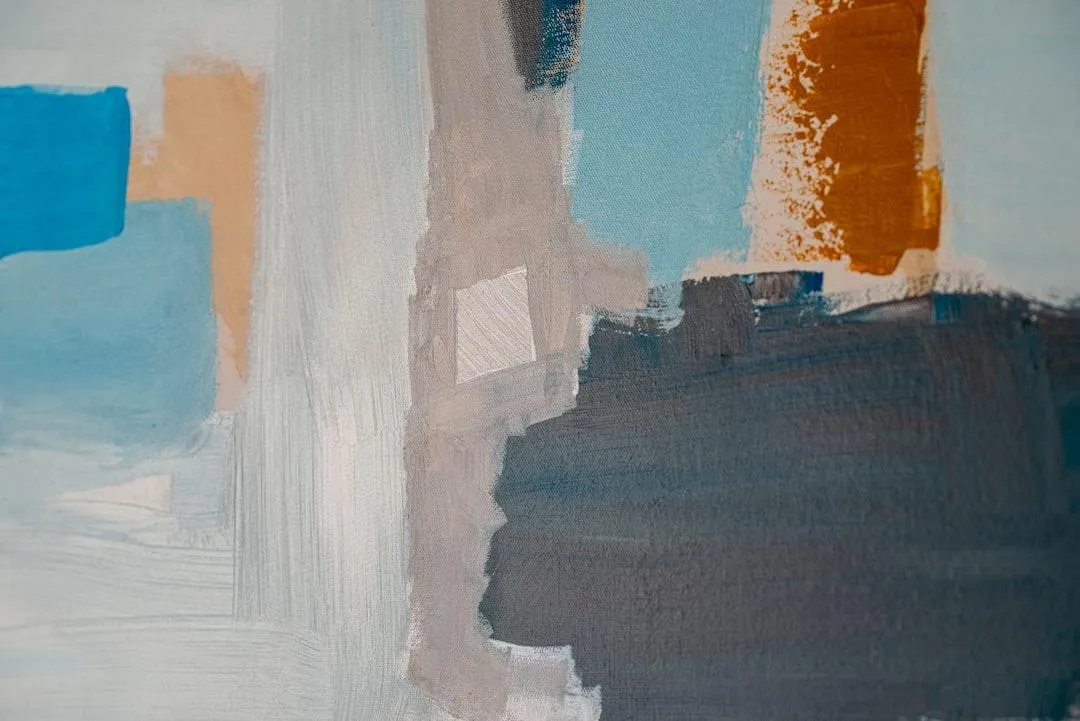
Clear value contrast creates separation.
It allows some areas to move forward and others to recede.
2. Edges (Sharp and Soft)
Edges define how forms exist in space.
A sharp edge brings something forward.
A soft edge allows it to move back.
If all edges are the same, the painting feels flat.
There’s no sense of distance.
3. Colour Temperature
Warm colours tend to advance.
Cool colours tend to recede.
But this only works if there is contrast.
If all colours sit in a similar temperature range, the painting loses depth.
4. Overlap and Layering
When one form overlaps another, space is created.
The eye understands what is in front and what is behind.
Without overlap, elements feel separate and disconnected.
5. Spatial Relationships
Depth is not just about individual areas.
It’s about how those areas relate to each other across the entire painting.
If those relationships are unclear, the painting feels compressed.
Why Depth Feels Difficult
Many artists try to fix depth by focusing on one element.
They:
increase contrast
add detail
change colour
But depth is not a single adjustment.
It’s a system.
And if the system isn’t working, individual fixes don’t solve the problem.
A More Useful Question
Instead of asking:
“How do I create depth in a painting?”
A more useful question is:
“What is creating space in this painting — and what is flattening it?”
This changes your approach.
You begin to observe rather than guess.
What to Look For
When a painting feels flat, pause and observe:
Are my values clearly separated?
Do edges vary, or are they all the same?
Are warm and cool colours working together?
Is there overlap between forms?
Does the eye move through space, or stay on the surface?
These questions reveal where depth is being lost.
My Experience
For many years, I worked through this without clear answers.
I would adjust paintings repeatedly, trying to “add depth.”
But the results were inconsistent.
What changed was not learning a technique.
It was learning how to see relationships.
Once I understood how value, colour, and edges worked together, depth became clearer.
Not automatic.
But understandable.
My Approach
This is how I guide artists today.
Not by teaching a single method.
But by helping them see what’s happening in their work.
When you can see:
where space is working
where it’s breaking down
and why
you can make intentional changes.
The Studio Framework
My work is built around this process.
Each month begins with a question connected to a core part of painting — including depth.
You explore that question through your own work.
As you paint, your awareness develops.
You begin to understand how your painting functions as a whole.
The Art Studio Residency
This approach takes place inside The Art Studio Residency.
It’s a private online studio where artists return regularly to paint, explore ideas, and develop their work over time.
There’s no fixed path.
The focus is on:
understanding your work
building consistency
and developing your practice
What Changes Over Time
As you continue, your perception shifts.
You begin to see depth not as something to add…
but as something to build through relationships.
You stop overworking areas.
You start making clearer decisions.
And your paintings begin to open up.
If you’ve been asking:
“How do I create depth in a painting?”
You don’t need more detail.
You need to understand the relationships that create space — and have a structure that supports that way of working over time.