Why does my painting feel off?
It’s a question that doesn’t always have clear words behind it.
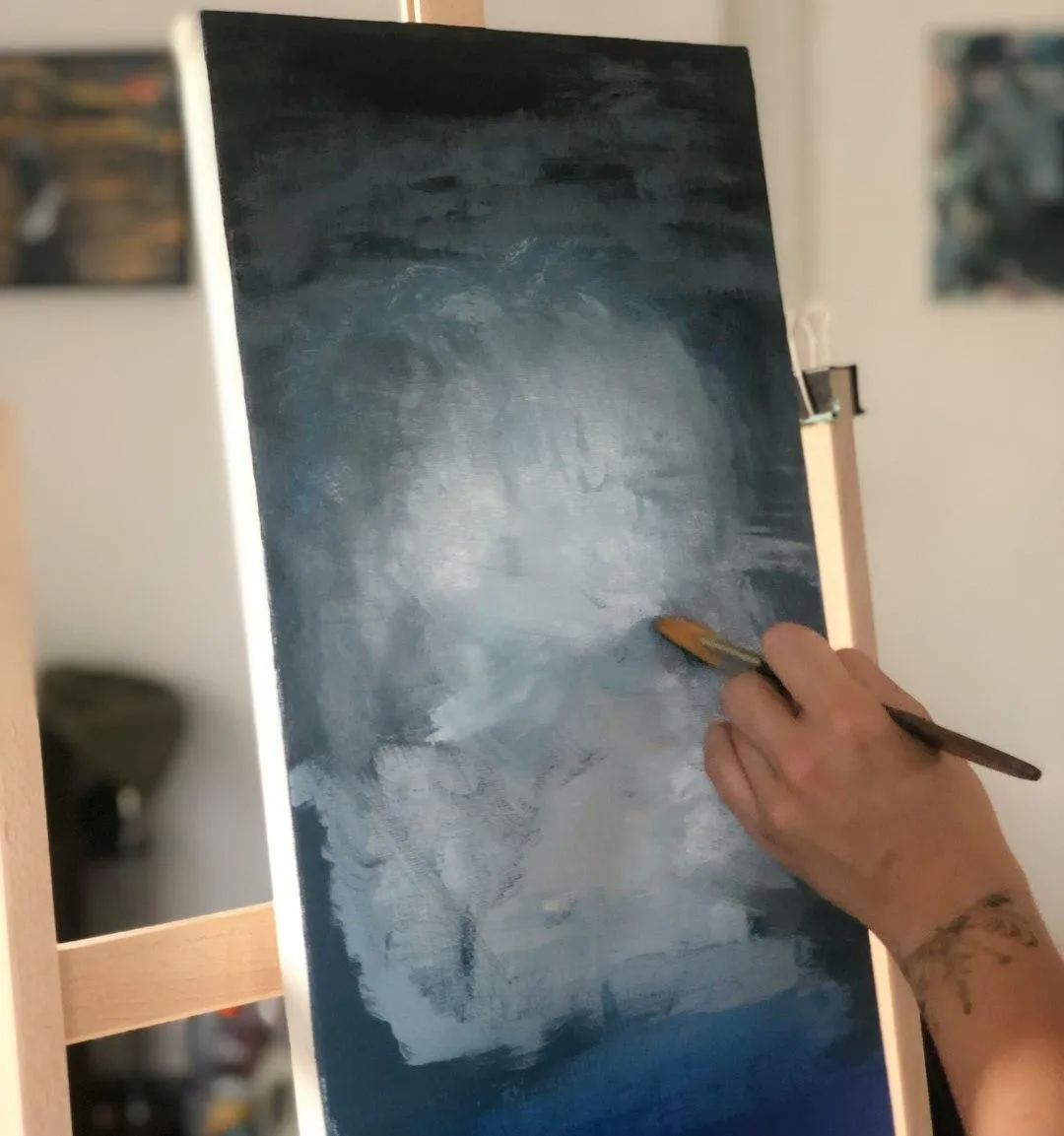
You step back from your painting.
Nothing is obviously wrong.
The colours are there.
The subject is recognizable.
And yet…
Something doesn’t sit right.
It’s not clear what to fix.
But you can feel that something is missing.
My Perspective
I’m Gosia Margie Witko.
I help artists understand what’s happening in their painting so they can develop their work with more clarity and confidence.
My background spans over four decades across design, technology, and consulting, where I focused on building systems that help people make sense of complex situations.
Alongside that, I’ve always maintained an art practice — often working through uncertainty, learning to trust observation rather than fixed rules.
That experience shaped how I approach painting today.
What “Feels Off” Really Means
When a painting feels off, it’s rarely about a single mistake.
It’s a signal.
A signal that something in the relationships within the painting is not working together.
This can show up as:
a composition that feels unbalanced
a focal point that isn’t clear
colours that don’t support the structure
areas that compete instead of connect
You may not be able to name it.
But you can feel it.
Why It’s Hard to Fix
Most artists respond to this feeling by:
adding more detail
changing colours
reworking areas repeatedly
But without understanding what’s causing the issue, these changes often make the painting more complicated — not clearer.
The result is a cycle:
adjust → step back → still feels off → adjust again
The Role of Relationships
A painting works as a system.
Every part affects every other part.
When something feels off, it’s usually because:
the relationships are unclear
Not just one element.
But how everything is interacting.
This includes:
value relationships
colour relationships
spatial relationships
compositional balance
If these aren’t aligned, the painting loses its sense of cohesion.
A More Useful Question
Instead of asking:
“Why does my painting feel off?”
A more useful question is:
“What is not relating properly in this painting?”
This shifts your attention.
You stop trying to fix isolated areas.
And begin to observe how the whole painting is functioning.
What to Look For
When something feels off, slow down and observe:
Is there a clear focal point, or is everything competing?
Do the values create structure, or do they flatten the image?
Are colours supporting each other, or conflicting?
Does the composition guide the eye, or scatter it?
These questions help you identify where the breakdown is happening.
My Experience With This
For many years, I worked through this feeling on my own.
Painting, stepping back, sensing something was off — but not having the language to understand it.
That changed when I began to look at painting not as isolated decisions, but as a system of relationships.
Once I saw that, the work became clearer.
Not easier — but more understandable.
My Approach
This is how I guide artists today.
Not by giving corrections.
But by helping them see.
When you can see what’s happening, you don’t need to guess.
You can respond.
You can adjust with intention.
The Studio Framework
My work is built around this process.
Each month begins with a question connected to a core part of painting.
You explore that question through your own work.
As you paint, you begin to notice:
patterns
connections
relationships
And over time, the feeling of “something is off” becomes:
“I can see what needs to change.”
The Art Studio Residency
This approach takes place inside The Art Studio Residency.
It’s a private online studio where artists return regularly to paint, explore questions, and develop their work over time.
There is no pressure to get it right.
The focus is on:
understanding your work
developing your eye
and building a consistent practice
What Changes Over Time
As you continue, your awareness deepens.
You begin to trust what you see.
You recognize when something is working — and when it isn’t.
The feeling of uncertainty doesn’t disappear.
But it becomes useful.
It becomes a guide.
If you’ve been asking:
“Why does my painting feel off?”
You’re already noticing something important.
The next step is learning how to understand that signal — and having a structure that helps you work through it with clarity.