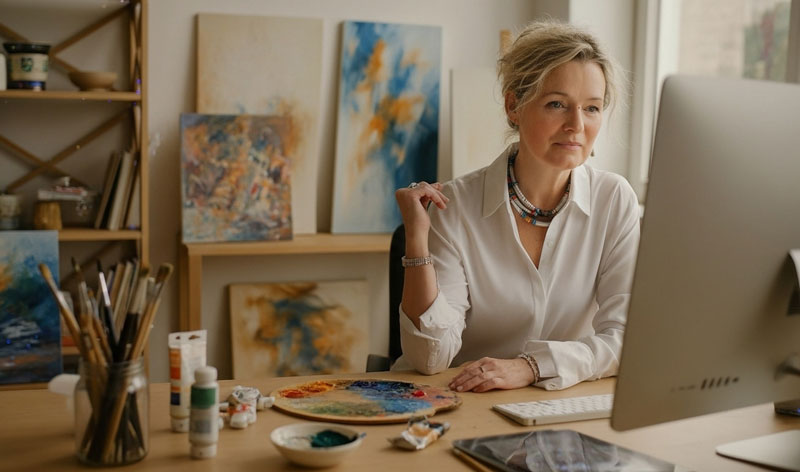
Hi, My name is Gosia Margie Witko
I'm an artist, researcher, and creator of The Art Studio Residency, an online studio dedicated to helping artists develop their work through clarity, structure, and ongoing practice.
For more than four decades, my work has moved across design, technology, photography, consulting, and fine art. While the industries changed, one thing remained consistent: helping people understand complex ideas and develop their work with greater confidence.
Today, I bring that same approach into the studio.
But long before any of that, I was an artist.
A Lifelong Relationship With art
My Early Experience
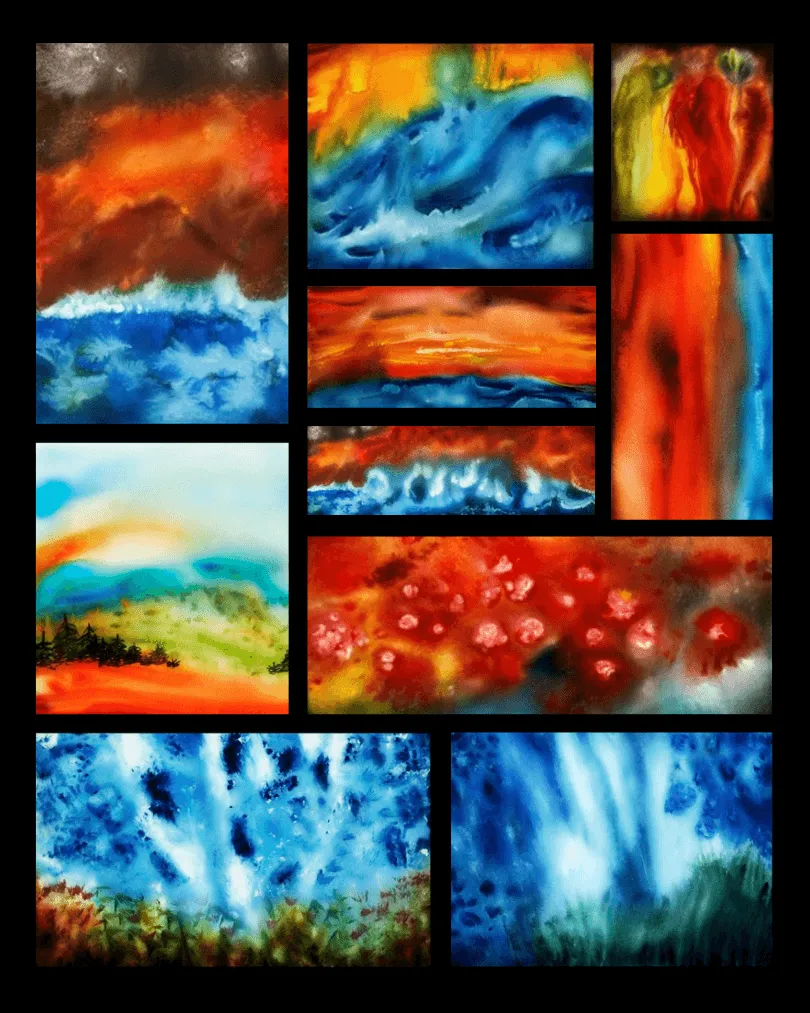
As a teenager and in my twenties, I explored different materials and techniques, from batik and encaustic to painting on textiles and working with acrylics. I was drawn to the process more than the outcome. Often, I didn’t complete pieces. I would move paint across my surface listening to music and getting lost in thought. At the time, it felt confusing, as though I was doing something wrong by not finishing. Looking back, I understand that this was a form of art therapy — a relationship with art, not a pursuit of results. My relationship with art helped me deal with severe childhood traumas.
My Moment of Tension
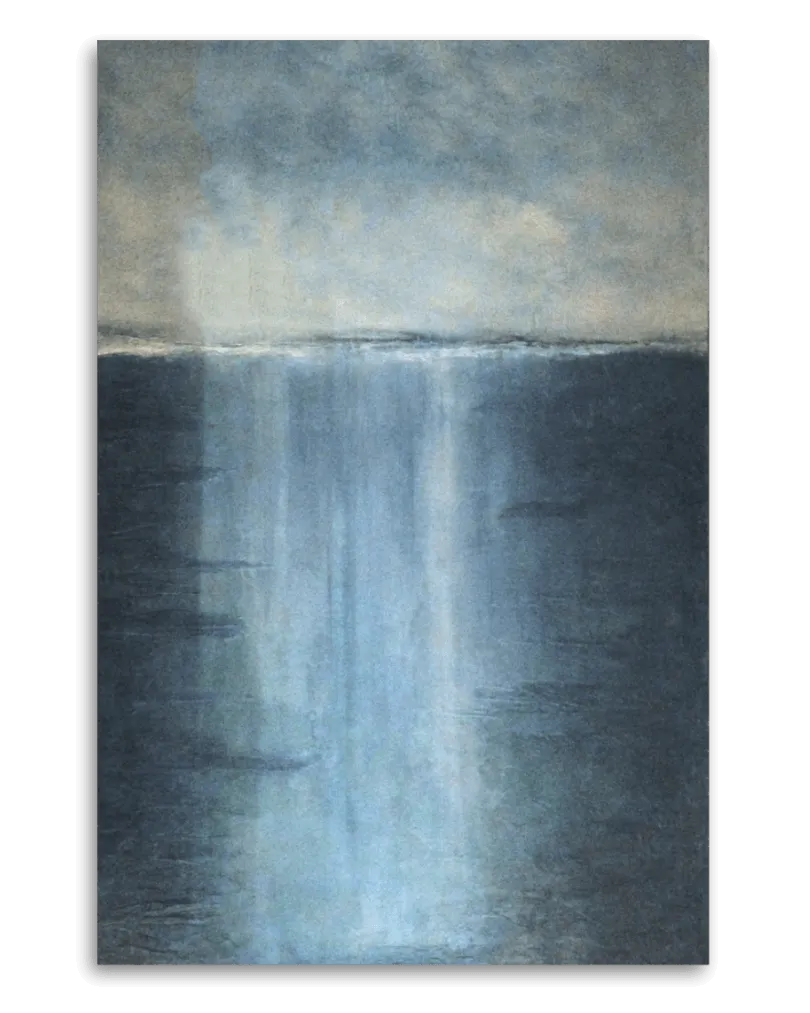
Perhaps my art healed me because later in life, when I retuned to painting again, I easily started finishing pieces. I brought one to a gallery owner. They requested I produce more to sell through their gallery. There was high demand for such work and pricing was lucrative. They even requested specific sizes and colour ranges that they knew they could sell. There was a clear path forward. But something didn’t sit right. I didn’t want to repeat the same work or turn the process into production. I didn’t want to lose the very thing that made art meaningful to me.
What Was Missing
Throughout all of this, I worked mostly alone. There was no place to ask questions, develop ideas or get supported with your practice over time. Art courses felt too rigid and structured although I did participate in them. It was hard to ask questions relating to my own art. Workshops felt so pressured because they were always outcome-driven. Art groups felt more social rather than developmental and I didn't have the social energy. University was not suitable for my life at the time, not to mention that years of repetitive study just didn't feel fun. There really wasn't an environment that supported an ongoing relationship with your own art based on your own interests. That absence stayed with me for years.
My Parallel Path
Alongside my creative work I pursued other studies, in computer sciences, business and later in design, moving into graphic, fashion, and interior spaces. Eventually, I built a photography studio, combining photography with digital painting to create fine art photographic works. People began coming to me to understand how I was creating these images and how my business became successful so quickly. Without realizing it, I had begun doing what I still do today — helping others see, think, and work more clearly with their creative practices. It's was something I had already done in business and technology.
My Realization
Over time, one thing became clear. Creatives need not only support and guidance but also a system — a framework. One that doesn't have a rigid structure. The kind that allows a creative practice to continue, deepen, and evolve over time. That was the gap I kept hearing echoed by others — and one I experience myself. So I created it.
The Studio Framework & The Art Studio Residency
My studio framework is built around a simple structure that begins with a question relating to a core pillar of every painting practice — something every painter needs to strengthen over time. This is explored through practice and developed through awareness and observation. This structure must be built so painters work can grow, evolve, and flourish. Not through step-by-step instructions — through a way of working and thinking that supports how an artist actually develops.
The Art Studio Residency
The studio framework takes shape through The Art Studio Residency. A private online studio designed for an ongoing painting practice — where people can return regularly, explore ideas, and develop their work freely within a thoughtful, structured environment. It brings together a live studio flow and rhythm, a space for practice and conversation, and curated reference resources for deeper development. It’s not a program to complete. It’s a place to return to.
ASR opens yearly and is currently closed for membership. You can get on the wait list and be notified when it's about to open.